NEW RELEASES : The exceptional 2018s from Hundred Hills - from the new reference point English vintage
NEW RELEASES : The exceptional 2018s from Hundred Hills - from the new reference point English vintage
I had been looking forward to tasting these wines for quite some time, in fact, ever since I saw Stephen Duckett’s beaming smile at the conclusion of the 2018 harvest.
Stephen is the owner and winemaker of Hundred Hills in the Stonor Valley in south-east Oxfordshire, which was founded in 2013. As I have written before, ‘I have tracked this project since its infancy and have been fascinated by the journey as much as the meticulous planning that has gone into establishing the vineyard and the winery. I have known Stephen and Fiona Duckett from way back, long before the idea of founding an English sparkling wine estate had gripped them. Stephen has always been a methodical person; but that isn’t at the cost of foresight. When he told me that they had explored well over 100 different sites located in dry chalk valleys across southern England before settling on a run down 50-acre farm in the Stonor Valley, I wasn’t surprised. A clear point of differentiation is that Hundred Hills is a wine estate by design; the Ducketts explored possible locations across the UK, sending soil cores off to be analysed in a laboratory in Champagne and assessing climatic data before committing. If the data and analyses had led them to the other side of the country, that’s where they would have been located – they had the intention from the outset of producing a great sparkling wine, not just another English sparkling wine’.
The Hundred Hills journey has been catapulted further forward by the 2018 vintage – of that there is little doubt. As Stephen commented three years ago, ‘the 2018 vintage will be a reference point vintage for English wine’ thanks to the near ideal conditions. Given this was a few years back, it is worth recalling that the Met Office recorded 2018 as the warmest summer in England since detailed records began in 1910! After an unusually warm May, temperatures touched 30 degrees Celsius in June, as the country basked in a glorious summer with customary hosepipe bans. A little rain at the end of August was much need, increasing berry size and pushing the fruit on to full ripeness. A hallmark of Hundred Hills is the long hang time they achieve: in basic terms, the duration the grapes can stay on the vine to reach optimum maturity. In 2018, the autumn was dry and unproblematic, so the grapes remained on the vine for between 102 and 110 days, enabling hints of those riper, stone-fruit flavours and aromas that already seem part of the Hundred Hills signature to develop.
Stephen’s pride and enthusiasm for the 2018s is fully founded. Low acidity is not an issue in English vineyards; in cooler years, wines can show a racy, almost bracing acidity in their youth. On account of the conditions in 2018, the acidities are a touch lower, the ripeness is such that a wonderful balance is struck with fine depth of fruit. Unsurprisingly, the 2018s are the most complete wines I have tasted from Hundred Hills. Their inaugural 2016 release was and still is staggering, the 2017s showed a ripeness uncommon to a cool year, and frankly uncommon to English wines, and the 2018s move up a notch in purity and poise, with depth that comes from riper year. There is a classicism about these wines, which relates to how the balance has been struck. I think the 2018s could be enjoyed earlier than their 2017 counterparts in most instances, given the generous fruit and lower acidity (note lower not low, all things are relative), but those character traits will certainly not preclude these wines ageing gracefully for many years to come; it is all a question of balance.
The new releases feature the follow up vintages to the 2017 Blanc de Blancs (made from one distinct parcel of Chardonnay) and 2017 Preamble No 2. Initially the Ducketts intended to use the Preamble name for a series of first releases, but given how well it showed and sold, they have now decided to make one Preamble every vintage in the style of the 2017 Preamble No 2. This wine aims to showcase the stone-fruit characters that the ripest fruit in the vineyard attains. And then, we have the first release of the stunning Rosé de Saignée, a wine that is sure to turn some heads. This is a tiny production, just 600 bottles were made in 2018, and it is possibly the most extraordinary English sparkling wine I have ever tasted…more on that below. We have been fortunate enough to wrestle a good allocation away from the team at Hundred Hills, who had one eye on holding it back!
Please note that none of the following three releases went through malolactic fermentation. All the wines were aged on their lees in bottle for 30 months before disgorgement, and the dosage on each is between 5 and 6 grams per litre.
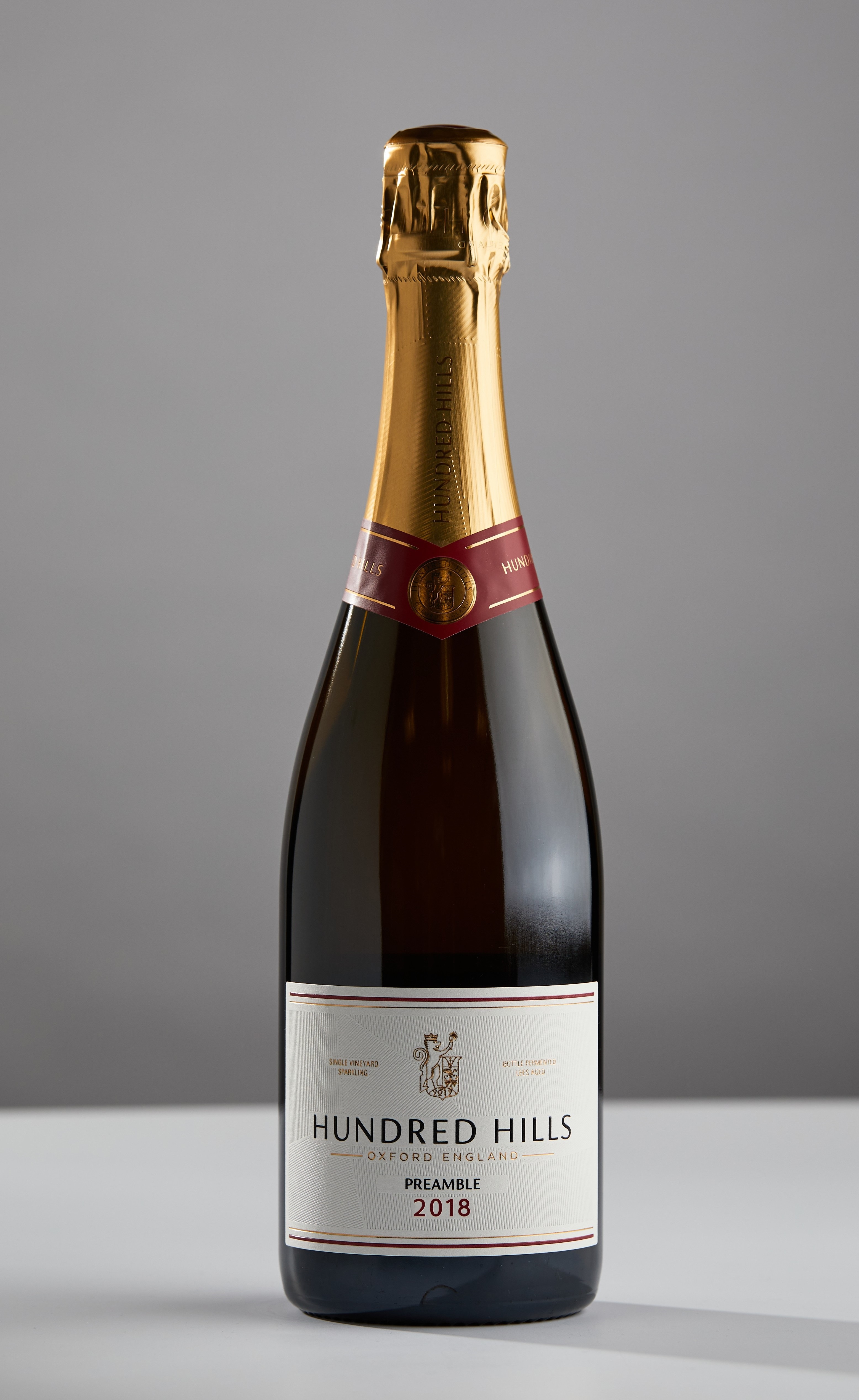
2018 Preamble, Hundred Hills £170 per 6 bottle case in bond
The follow up to 2017 Preamble No 2. This is a blend of 75% Pinot Noir and 25% Chardonnay. The Pinot Noir is the low-yielding 115 clone from an early-ripening parcel near the winery. Only the Chardonnay component went into cask for 2-3 months with some bâtonnage (stirring of the fine lees).
A little more classical than the 2017, which was a touch more exuberant. The 2018 reveals aromas of ripe, juicy Cox’s apple, with hints of nectarine and white peach. Revealing a soft, luxuriant mousse, the fruit is beautifully ripe with an underlying, bright mouth-watering acidity and hints of almond patisserie. The texture of this wine is so appealing, almost satiny, leading to a long, persistent finish that captures almost a zesty, creamy orange note. Not quite as flamboyant as the 2017 but shows the same DNA and a notch ahead in quality. Drink 2021-2025. (SL)
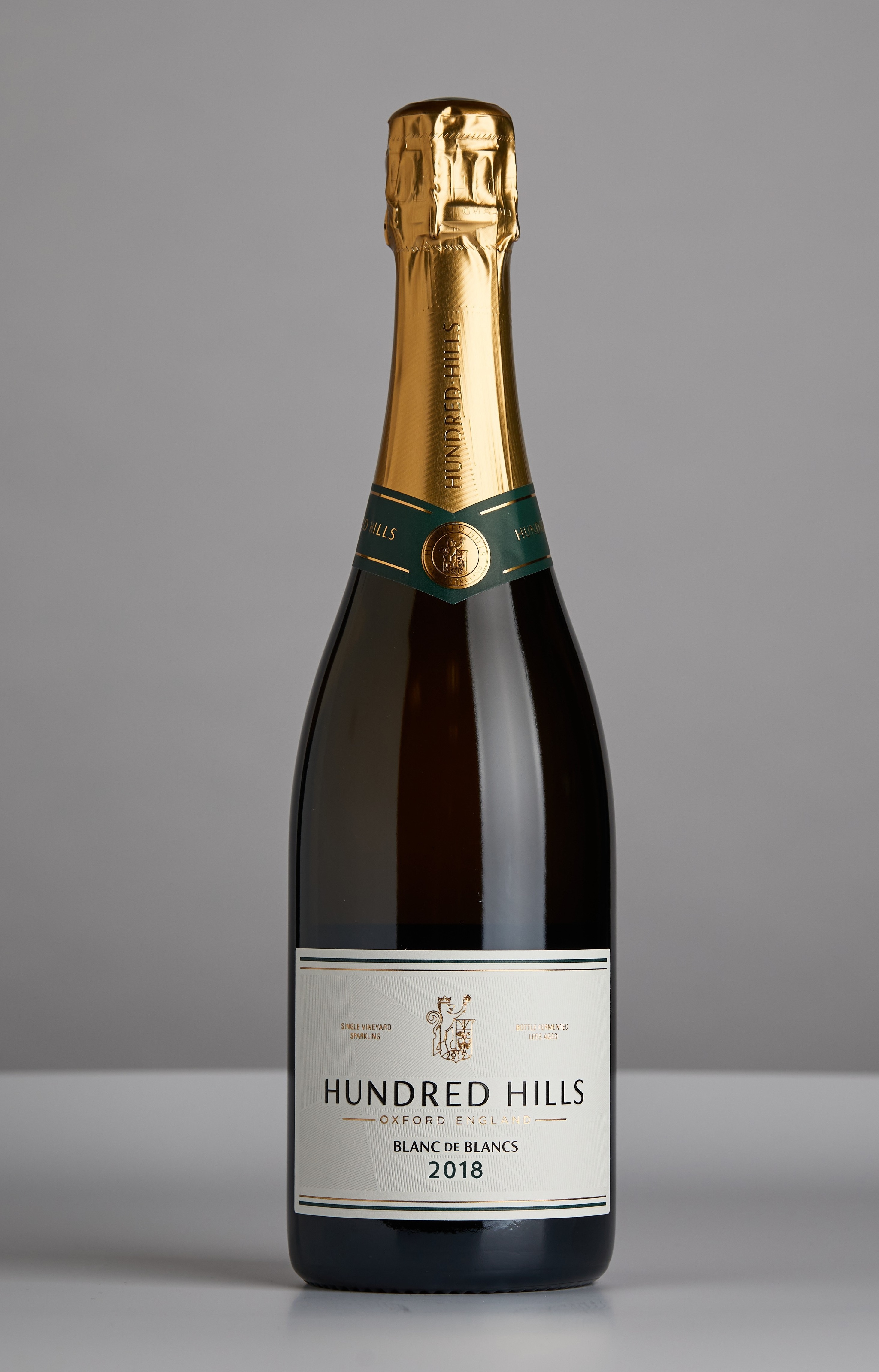
2018 Blanc de Blancs, Hundred Hills £150 per 3 bottle wooden case in bond
This pure Chardonnay comes from a single plot at the top of the west-facing slope opposite the winery. The base wine spent two to three months in cask with batonnage (stirring of the fine lees).
Pure, scented aromas of white flower, lemon cream and livelier citrus leads to a wonderfully defined palate. There is a delicate nature here, a lightness and precision, but equally a surprising depth and persistence to the fruit. Racy, leesy notes develop on the palate with discreet notes of creamy patisserie and a tell-tale chalky mineral nuance. This is a striking Blanc de Blancs, with very fine balance and wonderful purity. It has that crystalline quality to the fruit, and a certain raciness, but the acidity is so well wound to the core of the wine. Again, a very complete Blanc de Blancs and one that competes well in the wider category. Drink 2022-2029 (SL)
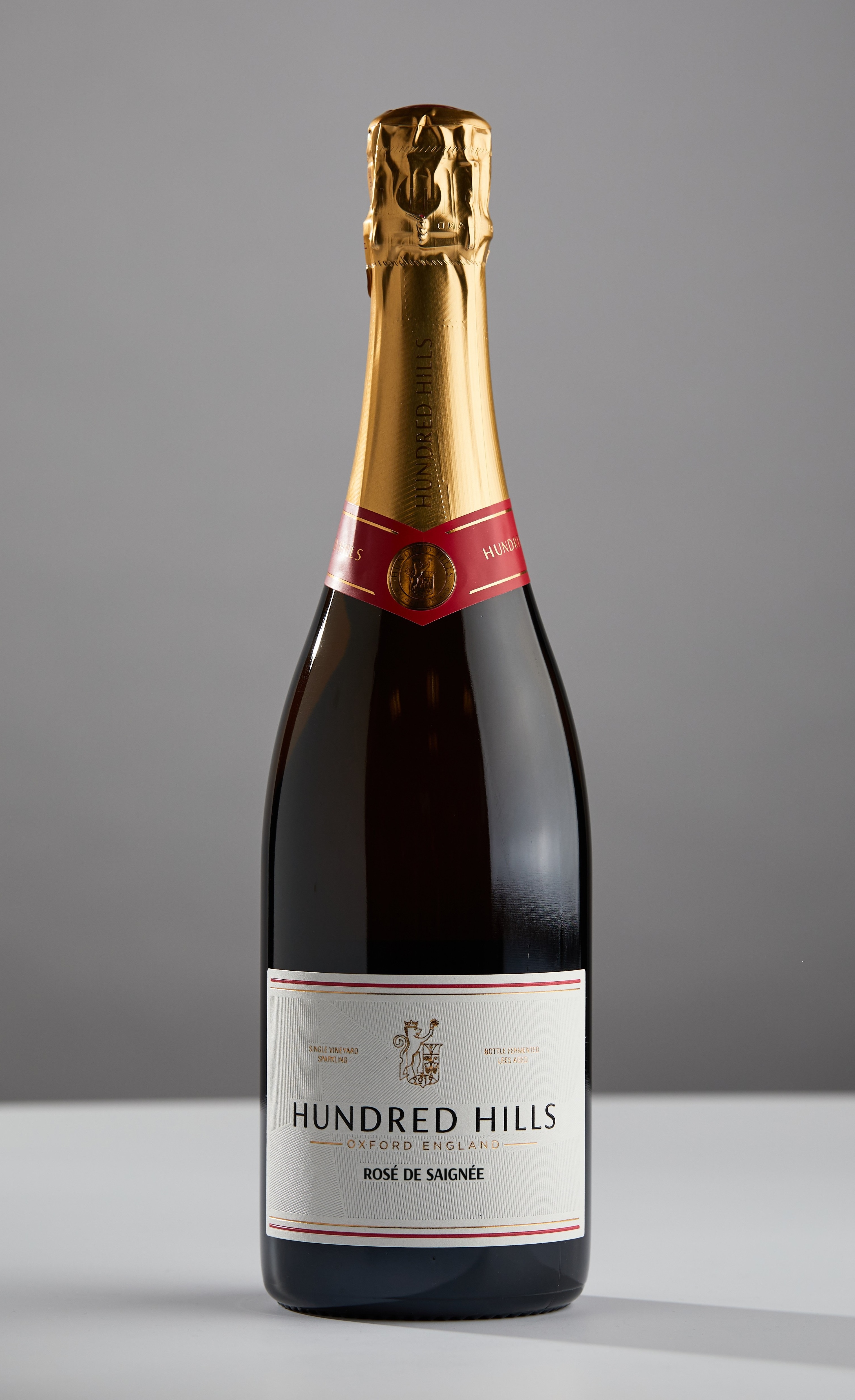
2018 Rosé de Saignée, Hundred Hills £180 per 3 bottle wooden case in bond
The base wine for this pure Pinot Noir was entirely fermented in old oak. The Rosé was made by allowing the colour from the skins to gently bleed into the juice over seven and a half hours. The fruit comes from the top parcel of clone 115, from the bank of vines just upslope from the winery, where the team harvested just the darkest, ripest berries individually.
Highly individual, the Rosé de Saignée boasts a remarkably deep hue in the glass, and a bright hue at that, on account of the efforts of the Hundred Hills team to avoid oxidation. The aromas are similarly unusual for a sparkling wine, with scented, ripe Pinot nuances of red berry, hints of toast, all of which reminded me of the youthful nature of a young Côte de Beaune Burgundy. Showing terrific depth of fruit with sappy, spicy Pinot characters with raspberry, pomegranate through to hints of tangy blood orange, this is a remarkable wine. Completely captivating and a great success – you almost forget it is a sparkling wine. Conditions do not permit the production of a saignée each year, but this might well develop a cult-like following! A little patience will be rewarded here for it to hit its stride. Stunning. Drink 2022-2030. (SL)
Please let us know of your interest. This is a much anticipated follow up to our initial offer.
Given we do not have any shipping woes to contend with here, all wines will be available for Christmas despatch!
The Return of Proof over Promise: Why Maturity Matters in a Stabilising Market
The Return of Proof over Promise:Why Maturity Matters in a Stabilising Market
For almost three years, the fine wine market has been working through one of the most prolonged corrections in its modern history. Prices have fallen sharply across most regions, trading volumes remain subdued, and sentiment among collectors and merchants alike has often appeared fragile. Yet beneath the surface, something important has changed.The dramatic falls that characterised 2023 and much of 2024 have largely subsided. While trading activity remains below historical norms, many of the major fine wine indices have now edged back into positive territory. The Liv-ex Fine Wine 100, Fine Wine 1000 and Fine Wine 50 indices have all recorded modest gains over the past year, suggesting that the market is no longer searching for a floor but is instead beginning to stabilise. The Liv-ex Fine Wine 100, the industry's leading benchmark, is currently up 4.4% year-on-year, while the broader Fine Wine 1000 Index has gained just over 2%. As reassuring as this may be, I am sure you will agree that this is not the definition of a bull market, but nor does it suggest a continuation of the turbulence that has defined the last three years. Put simply, this appears to be a market bouncing along the bottom. That distinction matters.
There remains a substantial amount of unsold inventory throughout the trade, particularly among more recent vintages and younger wines. Across Bordeaux and Burgundy, merchants, négociants and investors continue to hold stock acquired at prices that no longer reflect current market realities. In many instances, the reluctance to realise a loss, or for businesses to formally write down inventory values, has meant that considerable volumes of stock remain available only at prices that buyers are unwilling to accept. The challenge is not necessarily one of supply, but of valuation. Significant inventories remain available, yet much of that stock is still being offered at prices established under vastly different market conditions. Until those prices adjust, liquidity is likely to remain constrained. Volumes traded today remain well below those seen before the correction despite improving price stability. That said, the market is adapting and the clearest example is Bordeaux. The 2022 campaign, released into a market that was already beginning to weaken, was widely criticised, after the fact, for excessive pricing. Large quantities remain unsold. However, over the past twelve months, a growing number of wines from both the 2022 and 2021 vintages have appeared at significant discounts to their original release prices. The significance is not that these wines have become cheap; rather, they have become fair. Recent commentary points to Bordeaux prices having effectively returned to levels last seen around 2016-2018, erasing much of the extraordinary inflation generated during the post-pandemic surge. It seems the disconnect between release pricing and secondary market value is gradually being eliminated. For collectors, that matters.
For much of the last two decades, the market has often appeared to value potential more highly than proof. The expansion of en primeur, the growing influence of 100-point scoring, and the increasing consideration of the financial aspects of fine wine encouraged buyers to focus more on what a wine might become rather than what it had already demonstrated. In many cases, mature wines with decades of proven performance traded at surprisingly modest premiums to young vintages carrying little more than barrel scores, expectation, and marketing momentum. The origins of this shift arguably extend beyond the expansion of en primeur itself. The removal of wine duties in Hong Kong in 2008 opened the door to a powerful new source of demand and accelerated the globalisation of the fine wine market. As Chinese buyers entered the market in increasing numbers, demand naturally gravitated towards a relatively small group of internationally recognised names and labels. Brands became increasingly important. Critic scores became increasingly important. Simplicity often trumped nuance. This was entirely understandable. Purchasing decisions frequently centred on the clearest available signals: the reputation of the château, the strength of the brand and, increasingly, the score attached to a wine. The consequences were significant. Mature wines, whose virtues are often more nuanced and revealed only in time, gradually ceded attention to younger wines accompanied by exceptional scores, compelling narratives, and apparently limitless potential. In many respects, the market increasingly came to reward visibility over maturity and promise over proof.
Bordeaux adapted remarkably well to these changing market dynamics. Historically, wine had always been understood as an agricultural product, one in which variation from vintage to vintage was not merely accepted but celebrated. Yet as global demand expanded, many of the leading châteaux increasingly began to present themselves through the language of luxury brands. Consistency, exclusivity, and prestige became central themes. In some respects, the market became less focused on what a particular wine was in a particular vintage and more focused on what the name on the label represented. There is nothing inherently wrong with that evolution. Many châteaux invested heavily in vineyard management, winemaking, and quality during this period. Nevertheless, branding, by its very nature, tends to encourage continuity and uniformity. Fine wine remains an agricultural product shaped by place, weather, season, and time. While brands can create prestige and consistency of message, they cannot remove vintage variation or guarantee future performance. The correction may therefore serve as a useful reminder that even the greatest estates must ultimately be judged by the contents of the bottle rather than the power of the brand.
For a considerable period, these forces appeared mutually reinforcing. Rising demand, rising scores, rising release prices and rising asset values, coupled with rising quality encouraged the market to focus increasingly on future potential rather than demonstrated performance. Mature wines often struggled to command the premium their track records arguably deserved. Certainty became underappreciated. The recent correction appears to be reversing that trend. For perhaps the first time in a generation, certainty is once again competing effectively with expectation. The correction has reminded the market of a simple truth: certainty has value.
Today, it is becoming clear that collectors increasingly value certainty and therefore maturity matters, drinkability matters and provenance matters. A perfectly stored case of mature Bordeaux from a recognised great vintage offers something that no recent release can provide: a track record. We know how the wine has evolved. We know whether it has delivered on its early promise. We understand its drinking trajectory. We can access numerous reviews from major critics. We have evidence rather than expectation. We understand that volumes will have dwindled through consumption. We expect a degree of price stability. In short, we have grounds for confidence. I believe that this change in buyer behaviour may prove to be one of the most significant legacies of the correction. A painful lesson for us all perhaps, but potentially a lesson learned.
This shift is becoming visible in regional trends. Champagne, arguably the greatest beneficiary of the post-pandemic boom, subsequently endured one of the sharpest reversals as speculative demand retreated. Yet it has also shown some of the strongest early signs of recovery. The pattern is becoming familiar. Buyers are gravitating towards maturity and scarcity rather than novelty.
At the same time, there are tentative indications that international demand is starting to re-emerge. Asian merchants appear increasingly willing to replenish inventories after a prolonged period of caution, while in the United States buyers are beginning to adjust to a more certain tariff environment. Markets can tolerate almost any condition provided it is understood. Uncertainty, by contrast, tends to paralyse activity. To be clear, neither region is returning with the exuberance witnessed during previous cycles, but both are starting to show signs of life. The gradual return of demand has not gone unnoticed by investors.
You have no doubt already read that earlier this month, Michael Burry, famous for anticipating the collapse of the US housing market before the Global Financial Crisis, highlighted fine wine as an attractive tangible asset. Much of the subsequent commentary understandably focused on the headline-grabbing involvement of one of the world's most closely followed investors. More interesting, however, is what attracted his attention in the first place. Burry's argument was not centred on recent price appreciation or critic scores. Rather, he focused on the structural characteristics of the asset itself: diminishing supply, resilience to currency debasement and, notably, wine stored in UK bonded warehouses. Every bottle consumed permanently reduces global supply. Unlike many alternative assets, inventories of mature wine can only shrink. Perhaps equally revealing was his repeated emphasis on UK bonded storage. Despite Brexit and the increasingly global nature of the wine trade, the United Kingdom remains the world's leading trading and storage hub for investment-grade wine. London continues to serve as the principal marketplace through which much of the world's fine wine changes hands. When one of the world's most celebrated value investors turns his attention to fine wine, it is telling that his focus remains on bonded stock held in the UK, and while his focus may reflect US Dollar currency concerns, it still underlines London’s importance as a hub. The significance lies less in the endorsement itself and more in what it reveals about the maturity, transparency and global importance of the market infrastructure that has developed here over many decades. Whether or not one agrees with Burry's broader macroeconomic outlook is largely irrelevant. What matters is that value investors tend to emerge when markets are depressed rather than fashionable. The timing is revealing.
Yet scarcity alone may not be the only factor supporting mature wines in the years ahead. There is another development that may increasingly influence collector behaviour over the coming decade. The wines being produced today are not necessarily the wines that were produced twenty or thirty years ago. Climate change is no longer a future concern. It is already reshaping European viticulture, but what does it foretell? This year's Champagne harvest provides a striking illustration. Growers noted that harvests once associated with late September are now occurring weeks earlier, driven by higher temperatures and accelerated ripening. Producers have increasingly discussed the challenge of preserving the freshness and acidity that have historically defined the region and contributed to its remarkable longevity. Recent regulatory changes further underline that shift. Following exceptionally hot conditions and elevated sugar levels, Champagne authorities temporarily raised the permitted alcohol limit from the traditional 13% to 15% for the 2026 harvest. While relatively few wines are expected to approach that level, the decision reflects a profound change in growing conditions and, potentially, in resultant wine styles. The long-term implications remain uncertain.
For much of the twentieth century, Europe's greatest wine regions relentlessly sought greater physiological ripeness. As temperatures have risen, achieving ripeness has become far easier. Preserving freshness has become the greater challenge. Many of the greatest wines of the twentieth century were built around moderate alcohol, elevated acidity, and slow evolution. Modern vintages are frequently riper, richer, and structurally different. Will they age as successfully? Will their drinking windows prove as long? Will they evolve in the same manner? Notably, some critics have started to shorten their predicted drinking windows considerably. No one yet knows what the ramifications of climate change on longevity are – the answer will be revealed in time. What we do know is that mature wines from proven vintages have become increasingly valuable not solely because they are scarce, but because they provide certainty at a time when the future evolution of many modern wines remains untested. The implications for investors may be significant.
During much of the last two decades, broad market appreciation often did much of the heavy lifting. Strong demand, abundant liquidity, and a willingness to pay ever-higher prices for increasingly highly scored young wines created an environment in which owning the right region or category was sometimes more important than selecting the right wine. That may no longer be the case. The correction has reminded investors that fine wine is not an homogeneous asset class. Some wines that became market favourites during the recent boom may ultimately justify their valuations. Others may not. As speculative demand recedes, the distinction between exceptional wines, great wines and merely fashionable wines may once again become more apparent. The key takeaway is that the recovery is unlikely to be uniform.
For collectors and investors who have remained largely inactive over the last three years, waiting for previous holdings to recover, this may be an important observation. The question is no longer whether the market as a whole will recover. The more relevant question may be which wines are most likely to participate in that recovery. Selection appears increasingly important. Not every wine will benefit equally from the return of the maturity premium. Wines with established reputations for longevity, proven secondary market demand and genuine scarcity may increasingly distinguish themselves from those whose appeal rests primarily on recent scores or marketing momentum. In many respects, the market is becoming more discriminating.
If longevity lies at the heart of fine wine's investment appeal, then perhaps the focus should increasingly shift to wines whose ability to age has already been demonstrated rather than merely predicted. Historically, much of the market's attention has been directed towards identifying the next great wine. Today, there is a strong argument that equal attention should be paid to wines whose greatness has already been established. It may not be the most exciting approach, but in a market increasingly focused on certainty, it may prove the more rewarding one. For perhaps the first time in a generation, mature wine offers not only scarcity and drinkability, but also a degree of certainty in the face of evolving styles on account of climate change. These wines were produced under growing conditions that essentially no longer exist. Their evolution has been observed, documented, and understood. They increasingly represent fixed points of reference against which future generations of wine may be judged.
The correction may ultimately be remembered for more than simply restoring value. It may also have refocused attention on the qualities that have always underpinned fine wine's enduring appeal: balance, drinkability, and the complexity that comes with age, as well as longevity, provenance, and scarcity. As climate change continues to reshape the world's great wine regions, these factors may become more important than ever. For collectors, this may be one of the most compelling aspects of the current market. Prices have corrected substantially. Much of the speculation has disappeared. Many mature wines are available at levels that compare favourably with current releases. The market remains cautious; liquidity remains below normal and substantial inventories still need to find a home. Yet those very conditions are creating opportunities that have been largely absent for much of the last decade.
No one can say with certainty that prices will not fall further. However, after three immensely difficult years, the market increasingly appears to be doing what healthy markets eventually do: rewarding quality, maturity, scarcity, and value. Investors and collectors have traditionally focused on identifying the next great wine. The more important challenge over the coming decades may not be identifying the next great wine at all. It may be recognising the value of wines whose greatness has already been proven.
The return of proof over promise does not mean abandoning younger wines. It simply means applying a higher standard of scrutiny to what we choose to own.
Simon Larkin MW
'A wine for spring and summer drinking.' JM: 2022 Hautes Cotes de Nuits, Domaine Lecheneaut
'A wine for spring and summer drinking.' JM2022 Bourgogne Hautes-Côtes de Nuits, Domaine LécheneautExtremely good for its level and equally highly recommended.Allen Meadows, burghound.com, January 2024Domaine Lécheneaut, Bourgogne Hautes-Côtes de Nuits 2022£135 per 6 bottle case in bond(£183.50 per 6 bottle case inclusive of duty and VAT)
“A wine for spring and summer drinking.”As Jasper Morris has additionally commented in relation to the vintage: I believe that 2022 does deserve the epithet classic, albeit Modern Classic. The wines smell of pinot and taste of pinot with a mix between the classic red fruits of raspberry, strawberry and cherry. So, fresh ripe fruit and a balanced structure. Nothing overripe or overblown. Good acidity, moderate alcohol.The Lécheneaut wines are always so natural and at ease with themselves; they are all about meticulously cared for fruit that is handled with great sensitivity. Purity and sense of place are very much to the fore. The Hautes-Côtes de Nuits comes from vines in Chevrey, at 350 metres altitude, high up in the middle of the Hautes Côtes above Premeaux-Prissey, which helps maintain the freshness that makes this wine so appealing.But let’s also not overthink it. The Bourgogne Hautes-Côtes de Nuits 2022 is quite simply all about fresh fruit, subtle mineral balance and great drinkability. Ever attuned to the zeitgeist here at Atlas… this is even chillable – for the summer drinking Jasper Morris mentions.Buy. Take delivery. Enjoy.That’s it.
Domaine Lécheneaut, Bourgogne Hautes Côtes de Nuits 2022£135 per 6 bottle case in bond£183.50 per 6 bottle case inclusive of duty and VAT
Perfumed floral red fruit on the nose. The palate displays lovely balance and freshness with a wonderfully at ease flowing texture. Drink 2026-2032 (ROM)
“Top value”, Allen Meadows, burghound.com, January 2024A slightly riper nose features a spicy mix of both red and dark currant with more floral elements. The medium-bodied flavors are not quite as dense as those of the Clos Prieur but they're finer and with more evident minerality to be found on the youthfully austere and sneaky long finale. This is also extremely good for its level and equally highly recommended. Drink 2026+
Jasper Morris MW, insideburgundy.com, November 2023Low pruned vines in the hamlet of Chevrey, marly topsoil straight on the mother rock. Aged in 450 litre barrels. A little fresher red fruit, a little less density too, raspberry and redcurrant, attractive, with good acidity. A wine for spring and summer drinking. Drink from 2025-2028
Top tips and conclusions from the Atlas Big Barolo Bash
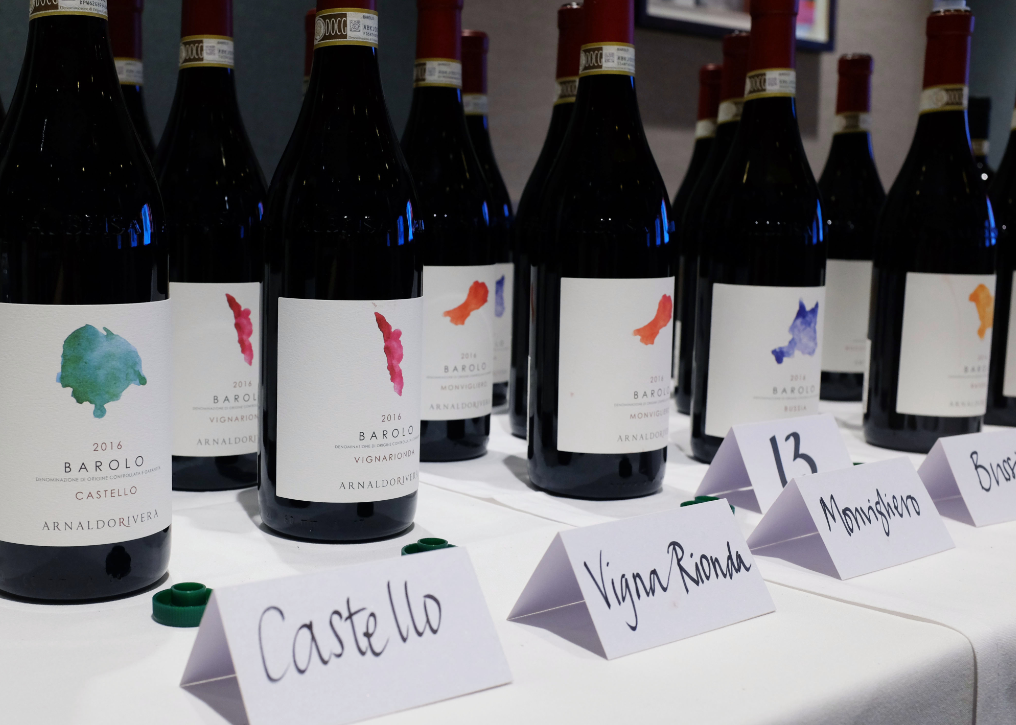
After our Big Barolo Bash held at Salisbury House, EC2M, on Wednesday 4th December 2024, I thought I would share a few thoughts as it is not often that you get the chance to compare 42 different Barolo spanning vintage 2011 to 2019.The wines shown were grouped by vintage rather than by grower. The aim was to encourage an understanding of vintage characteristics. We also felt this would spare clients the significant challenge of moving from a softer, lighter vintage to a richer, more tannic one and then back again in a repeated cycle through all producers. Deciding on a tasting order is never easy, even more so with a variety like Nebbiolo, known for its bright acidity and structural tannins. Our buyer, Seb Agnello, manned the 2018 and 2019 table. These two vintages show distinctly different styles. 2018 was a more mixed vintage, still with some notable successes. It is a lighter expression of the Nebbiolo variety, but by no means a poor vintage. It has always been our view that it was a misunderstood vintage; wines from this year have shown appreciably better after a little time in bottle, having been difficult to read when very young. From the wines shown, the Barolo Prapo from Ettore Germano impressed clients with its cherry red fruit – for a Barolo from Serralunga d’Alba, a commune known for richness and power, this is an incredibly pretty example, vintage in, vintage out. Chiara Boschis’ blended Barolo, Via Nuova, drawn from various crus from the across the region, received plenty of praise from clients, too. Perhaps the wine that impressed most from this selection was Vietti’s Cerequio 2018, which showed blue fruit touches, a fine freshness and those slightly rounder tannins that are common to La Morra. The 2019s were a last-minute addition and were the two single vineyard wines of Andrea Bosco which offered an opportunity to compare a Barolo from the lighter soils of Verduno with a richer wine from La Morra; respectively, the wonderfully refined Agostino Bosco, Barolo, Neirane and the darker, brooding Agostino Bosco, Barolo, La Serra. Clients seemed interested in how these two most recent vintages would shape up in time. While the 2019s are the product of hot year, these showed how that vintage manages to show a certain classicism. They will warrant 8 to 10 years in bottle before showing in their prime. In contrast, the 2018s, with their lighter accent, are already starting to show well, even if some of the leading examples will still demand 4- or 5-years patience before really starting to sing. The 2017 table was, for me personally, one of the most fascinating. Not only were some of the region’s most notable growers featured in this line up, but it showcased a vintage that I fear has been a little overlooked. 2017 was a hot and dry vintage and in an earlier era I don’t believe the wines would have come through as well as they have. Growers have had to adapt to modern day conditions in Barolo; whatever way you cut it, this is down to climate change. As I remarked to various clients, in the 1990s there were perhaps three notable vintages which delivered ripe fruit and fine structure, other vintages in which many growers lost precision and freshness in their wines but a greater number of years in which it proved tough to ripen Nebbiolo fully. Leaf-plucking became routine to expose the fruit to the sun and allow aeration. Rolling the clock forward, between 2010 and 2020 we have not had a bad vintage. There have been challenging conditions, but we have had four great vintages - 2010, 2013, 2016 and 2019. Then there have been some more mixed years, but ones in which good growers have nevertheless excelled. Today it is more about providing some protection to the fruit, as opposed to exposing it. This is quite an incredible switch around to have occurred in just 20 years. Growers have needed to learn fast – to learn how to prepare their vineyards for the modern-day challenges of heat and drought, when not so very long ago, the challenge was inclement weather. 2017 is a successful hot vintage, particularly given there were four months in the growing season without any rain. The cooler weather at harvest really assisted in providing freshness to the aromatics and brightness to the fruit; this was notably evident in the selection of 2017s at the tasting. The two wines from Brovia were just beautiful; both the Brea ‘Vigna Ca Mia’ and the Villero were way ahead of the quality that a reading of the vintage reports might suggest possible. Instead we found pure fruit, refined tannins, glossy textures and a complex amalgam of fruit nuances and tertiary notes. Equally compelling were the duo from Poderi Oddero. In the amazingly graceful Vigna Rionda, from one of the region’s finest terroir, Oddero has crafted a genuine beauty in 2017 and I would suggest it isn’t far removed from the quality they delivered in the tremendous 2016 vintage; this should be a wine on your watch list if you a fan of the finest Barolo. The Bussia Vigna Mondoca showed in a similarly impressive manner; Bussia, in Monforte d’Alba, is a controversially large cru but when you taste wines of this calibre, there is no doubting that it has the potential to rank highly, depending on the exact location of the vines within the . Very rich, with a deep damson, plum quality to the fruit and hints of spice, this rich Barolo will demand patience, even in a year like 2017 where some wines are starting to drink. In this latter category, we would place Vietti’s reliable Castiglione blend and, surprisingly, Vajra’s 2017 Ravera, which seems to show very little of the austerity that is more typical of this cool, elevated Novello cru. The 2016 table certainly drew considerable attention, as clients were aware that this vintage is considered to be one of the all-time greats. The 2016 vintage represented the perfect growing season with no excesses or problematic weather. These wines have such appealing fruit and fine tannin that a number show that they are already approachable though even the humblest from this vintage have ageing potential. The table was manned by Atlas’ Nick Pitcher, who commented that clients were impressed by the 2016 Barolo del Comune di La Morra from Renato Corino on account of its expansive, rounded fruit. Renato has always made rich, softly textured wines and his entry level Barolo, principally made from young vines in Rocche del’ Annunziata, has always been considered by Atlas to be something of a bargain; the 2016 is no exception in this respect. Brovia’s Barolo 2016, from across their holdings, also impressed, making for an impressive showing on the night for this traditional producer when you consider how well their 2017s showed. The Brovia and Corino 2016s offer great value, a point borne out by client purchases! Parusso’s lesser known Mariondino from Castiglione Falleto also won favour with its intense fruit, with the touch of oak adding tobacco and vanillin notes, one of the few wines in the room to be aged in that manner. Nick also showed the component wines of Arnaldo Rivera’s Collector’s Case, as Nick said what a vintage for the cooperative of Terre del Barolo to launch a premium mixed case. Clients were fascinated to taste six different crus, each from one of six of the different communes of Barolo, all from the same producer, and from the same vintage. As one client commented ‘A great dinner party experience to be had tasting single cru Barolo at a bargain price!’. It is hard to argue with that. While the Arnaldo Rivera wines aren’t in the Premier League of Barolo, they are well made, approachable and provide a good introduction to understanding the single cru vineyards and the communes that make up the patchwork that is Barolo. Unsurprisingly, the lighter tannins and juicy red from on the Monvigliero impressed various tasters as did the richer, Vigna Rionda. The inclusion of the 2016 Neirane from Agostino Bosco sparked interest too, with many clients returning to the 2019 to refresh the comparison; the 2016 is just starting to drink as this vineyard possesses lighter soils with an element of sand, whereas the 2019 will need more patience. Then finally, we had a mixed table spanning the vintages from 2015 back to 2011, manned by Atlas’ Toby Herbertson. This table was a real draw as it allowed clients some insight into how Barolo ages; this was very much needed as some clients weren’t particularly familiar with the region. Some clients started tasting here, which might not have made it easier to move onto younger wines thereafter. The ability to compare wines from the same growers in 2011 and 2012 fascinated people and both vintages impressed. 2011 is one of those vintages that is starting to drink really well – it was a hot vintage, by the standards of that point in time, but it was wonderful to see how, if anything, the wines seem to have picked up a little more precision as they have aged. Both the Sandrone Cannubi Boschis 2011 and the Vietti Ravera 2011 found favour. The 2012 Sandrone, Le Vigne, shows just how well Sandrone adapt to vintage conditions. The 2013 Cappellano Pie Rupestris was very popular on the night; clients were impressed by the complexity and quality, though some struggled to spot the value in contrast to other wines shown. The conversation surrounding this table focused on when Barolo tannins start to soften and when wines come on stream for drinking. The lighter framed 2014s were up against it, sandwiched as they were between the more tannic 2013s and the bolder, richer 2015s. That said, many clients commented on the attractive nature of Vajra’s 2014 Ravera, which, like the 2017 of the same wine, showed in a forward drinking manner with a dark, glossy fruit, floral aromas and hints of spice. Indeed, all Vajra’s wines were complimented for their accessibility and the purity of the fruit. Finally, the two 2015s proved fascinating to taste. Giovanni Rosso’s Cerretta shows just why there is excitement brewing about this estate. It captured a flinty mineral note that added complexity to a rich palate of dark, slightly brooding fruit, while the tannins were finely expressed and far less obtrusive as they can be in young wines from this Serralunga d’Alba-based cru. Vietti’s inaugural Riserva also attracted plenty of attention; the extra ageing having softened and rounded out the tannins.All in all, the evening was a great success and we have received many positive comments on the venue and the format. We will certainly be running another event at this venue in the New Year.My final thoughts concern the way in which things have evolved in Piemonte. Climate change has meant that Barolo vintages face few of the pitfalls they once did. Instead, there are different challenges, more often than not related to heat and drought. In rapid time, growers have adapted in both the vineyard and cellar to meet these challenges, and today, I would argue, Barolo is one of the most consistent wine regions in Europe. There is just so much to explore, different crus with different altitudes, exposures and soils, as well as producers who employ different techniques. Without doubt, Nebbiolo is a sensitive grape variety that reveals different nuances in different conditions; it rivals Pinot Noir in this respect. Putting on a tasting like this allowed us to share our fascination with the wines and the region. Frankly there has never been a better time to buy Barolo – perhaps you could argue it is the last bastion of great value for finely nuanced reds In Europe. Certainly, £300 per case doesn’t get you far in Burgundy or Bordeaux, but it can get you an impeccably crafted, single vineyard Barolo. That point came across loud and clear to our audience on Wednesday night.